Let’s talk about how we can build your commerce project — tailored to your business, powered by Rigby
Wholesale commerce is now a core sales channel for B2B businesses. It refers to selling products online to other businesses, typically in bulk and at discounted rates.
According to the International Trade Administration, the global B2B eCommerce market is projected to reach around $36 trillion by 2026, growing at about 14.5% CAGR. Between 2025 and 2026 alone, digital B2B sales volume increased by more than $4 trillion, rising from roughly $32 trillion to $36 trillion.
These numbers show two clear trends.
First, wholesale and broader B2B eCommerce is scaling fast, driven by bulk orders, repeat purchasing, and long-term customer relationships moving into digital channels.
Second, B2B eCommerce remains several times larger than retail eCommerce, with total transaction value far exceeding B2C sales. Wholesale commerce is not a niche within eCommerce anymore, it represents the largest share of global digital trade.
This growth brings operational pressure. Wholesale businesses manage large catalogs, negotiated pricing, customer-specific terms, and recurring purchase orders across different customer groups and markets. Manual workflows, email-based ordering, and disconnected systems no longer scale at this volume.
Moving these processes into a wholesale eCommerce platform reduces manual work, shortens the buying process, and gives both buyers and sales teams direct access to pricing, availability, and order history.
They connect selling products online with inventory management, existing ERP systems, payment workflows, and wholesale order management.
Buyers can place bulk orders through self-service accounts, while sales reps and sales teams keep control over pricing strategies, customer relationships, and supplier coordination.
This guide is for B2B business owners, wholesale managers, and digital commerce strategists looking to understand and implement wholesale commerce in 2026.
In this article, you will explore how wholesale ecommerce works, how it differs from retail ecommerce and traditional b2b commerce, and what to look for when building or selecting a wholesale ecommerce platform in 2026.
Key insights
- The global B2B ecommerce market is projected to reach around $36 trillion by 2026, growing at about 14.5% CAGR.
- Between 2025 and 2026 alone, digital B2B sales volume increased by more than $4 trillion, rising from roughly $32 trillion to $36 trillion.
- Wholesale eCommerce is the largest segment of digital commerce globally, with B2B transaction value far exceeding retail eCommerce.
- Self-service buying is now a standard expectation for wholesale buyers, reducing manual work for sales reps and sales teams.
- International wholesale expansion depends on multi-currency pricing, multi-language catalogs, and multi-warehouse inventory support.
- Automation and AI are used primarily for demand forecasting, pricing insights, dynamic customer segmentation, and workflow automation.
- Wholesale eCommerce platforms in 2026 are evaluated by their ability to handle scale, data consistency, and pricing control rather than storefront features alone.
Understanding wholesale eCommerce
What is wholesale eCommerce?
Wholesale eCommerce is the practice of selling products in bulk to other businesses through online channels. It combines the traditional wholesale model with the convenience and reach of eCommerce platforms.
In a wholesale ecommerce setup, manufacturers, distributors, or wholesalers sell large quantities of products to retailers or other businesses at discounted prices, all through digital means.
How do wholesale platforms work?
Wholesale eCommerce businesses typically deal in bulk quantities, offer wholesale prices (often with tiered pricing structures), and cater primarily to other businesses (B2B) rather than end consumers.
They utilize specialized wholesale eCommerce platforms to manage their operations and often have a more extensive catalog compared to retail businesses.
The wholesale eCommerce process typically follows these steps:
- A wholesaler sets up an online store using a wholesale eCommerce platform.
- They upload their product catalog with wholesale pricing.
- B2B buyers browse the online store and select products.
- Buyers place bulk orders through the platform.
- The wholesaler receives and processes the order.
- Products are shipped to the buyer.
- Payment is processed, often with terms specific to wholesale transactions.
4 differences between wholesale and retail eCommerce
While both wholesale and retail ecommerce involve selling products online, there are significant differences:
- Wholesale eCommerce caters to businesses, while retail eCommerce targets individual consumers.
- Wholesale transactions involve large quantities, whereas retail deals with smaller, individual purchases.
- Wholesale prices are typically lower due to bulk purchasing, while retail prices include markups for individual sales.
- Wholesale eCommerce platforms offer features like bulk ordering and tiered pricing, which are not typically found in retail eCommerce stores.
Is wholesale eCommerce suitable for B2B eCommerce platform?
It's worth noting that B2B eCommerce, or business-to-business eCommerce, is a broader category that encompasses wholesale eCommerce.
While all wholesale eCommerce is B2B, not all B2B eCommerce is wholesale.
B2B eCommerce can include services, software, and other business-to-business transactions that don't necessarily involve bulk product sales.
Explore more about B2B eCommerce in our article: B2B in E-commerce: Everything You Need to Know.
Key players in the wholesale eCommerce industry
The wholesale ecommerce industry involves several key players:
- Manufacturers: Produce goods in large quantities.
- Wholesalers: Buy from manufacturers and sell to retailers.
- Distributors: Similar to wholesalers, but often with exclusive rights to certain products.
- Retailers: Buy from wholesalers and sell to end consumers.
- B2B buyers: Businesses that purchase wholesale for their own use or resale.
- Wholesale eCommerce platform providers: Companies that develop and maintain the digital infrastructure for wholesale commerce.
Wholesale business models and how they operate (with examples)
Wholesale commerce is not a single operating model. Different types of wholesale businesses use eCommerce in different ways, depending on ownership of products, supplier relationships, and sales structure.
Below are the most common wholesale business models, with practical examples.
Manufacturers selling directly (direct-to-business)
Manufacturers produce goods and sell wholesale products directly to wholesale buyers such as retail businesses or enterprise brands. This model removes traditional intermediaries and gives manufacturers full control over wholesale prices, customer groups, and supplier relationships.
Manufacturers selling wholesale online often use digital catalogs, account-specific pricing, and volume-based discounts. Wholesale ecommerce platforms help manage bulk orders, purchase orders, and inventory management across factories and warehouses.
Example: A furniture manufacturer selling bulk orders directly to retail stores in different countries through a wholesale ecommerce platform.
Distributors
Distributors buy products from manufacturers and sell them to retail businesses or other wholesale buyers. They usually manage large inventories, multiple brands, and complex logistics.
In digital wholesale, distributors rely on inventory visibility, customer-specific catalogs, and wholesale order management. Pricing structures often differ by customer group, purchase history, or negotiated agreements.
Example: An electronics distributor supplying office supplies and hardware to retail chains and B2B buyers.
Traditional wholesalers
Traditional wholesalers operate between manufacturers and retailers, often handling storage, logistics, and pricing negotiation. Many of these businesses previously relied on sales reps, phone orders, and offline processes.
Wholesale eCommerce allows traditional wholesalers to move repeat orders and standard purchasing processes into self-service channels. Sales teams focus on large accounts and negotiated pricing, while smaller customers order wholesale online.
Example: A food wholesaler supplying restaurants and retail businesses with recurring bulk orders.
Brokers and agents
Brokers do not own inventory. They connect buyers and suppliers and earn commissions on completed transactions. Pricing is often negotiated per deal, and inventory management stays with the supplier.
In wholesale ecommerce, brokers use digital catalogs, customer data, and account management tools to support purchasing without handling fulfillment directly.
Example: A broker connecting apparel manufacturers with retail buyers across multiple markets.
Import and export wholesalers
Import/export wholesalers focus on international trade. They source products from one region and sell them wholesale in another. This model depends on logistics coordination, currency handling, and regulatory compliance.
Wholesale eCommerce platforms support this model by handling multiple storefronts, localized pricing, and customer-specific catalogs for different markets.
Example: A company importing consumer goods from Asia and selling wholesale to European retail businesses.
Each wholesale business model places different demands on pricing strategies, inventory management, and system integrations. Understanding the operating model helps define how a wholesale eCommerce platform should be built and which features are required from day one.
Marketplace platforms and dropshipping in wholesale commerce
Wholesale commerce increasingly runs through third-party platforms and indirect sales models. Two common approaches are selling through B2B marketplaces and operating wholesale dropshipping.
Both models change how wholesalers handle inventory, pricing, and customer relationships, and both require specific tools and system support.
Wholesale on B2B marketplace platforms
B2B marketplace platforms connect multiple wholesalers, manufacturers, and distributors with wholesale buyers in one shared environment. Wholesalers list wholesale products, define pricing structures, and sell to retail businesses or B2B buyers already active on the platform.
In this model, the marketplace often controls parts of the buying process, including checkout, payments, and sometimes logistics. Wholesalers usually compete on wholesale prices, availability, delivery terms, and product range. Customer relationships are partially owned by the platform, not fully by the seller.
Key characteristics of wholesale marketplace sales:
- Access to existing demand from wholesale buyers
- Faster entry into new markets without building a storefront
- Limited control over customer data and account management
- Platform rules around pricing strategies, transaction fees, and visibility
Wholesale platforms integrated with marketplace APIs help wholesalers sync inventory management, wholesale order management, and pricing across their own channels and marketplace sales.
Wholesale dropshipping model
In wholesale dropshipping, the wholesaler or manufacturer ships products directly to the buyer, while the seller manages the storefront, pricing, and customer relationship. Inventory is not held by the seller, which lowers upfront costs and reduces storage risk.
Wholesale dropshipping is common when:
- Manufacturers sell wholesale products through multiple partners
- Distributors want to expand digital wholesale without warehouse expansion
- Retail businesses want to sell wholesale online without owning stock
This model relies heavily on accurate inventory data, fast order routing, and clear service level agreements between partners.
Key requirements for wholesale dropshipping:
- Real-time inventory visibility
- Automated order forwarding to suppliers
- Status updates and order tracking
- Pricing rules that protect margins across partners
Tools and systems supporting these models
Both marketplace sales and wholesale dropshipping depend on system integration rather than manual coordination. Common tools include:
- Wholesale ecommerce platforms with API support
- Inventory management systems connected to suppliers
- Existing ERP integrations for purchase orders and invoicing
- Order routing and automation tools
- Pricing logic supporting account-specific pricing and bulk discounts
Including marketplace and dropshipping paths in a wholesale strategy helps reach new customer groups, test new markets, and scale wholesale sales without rebuilding the entire sales infrastructure.
26 benefits of wholesale eCommerce
Advantages for wholesale businesses
Wholesale eCommerce offers numerous benefits for businesses, including:
- Increased efficiency in order processing and fulfillment,
- Reduced operational costs compared to traditional wholesale methods,
- The ability to reach a wider audience of potential buyers.
- Improved inventory management through real-time tracking,
- Enhanced data collection for better business insights.
Benefits for wholesale buyers and retail businesses
For B2B buyers, wholesale eCommerce provides:
- Easy access to a wide range of products,
- Convenient ordering process (often with self-service options),
- Transparent pricing and availability information,
- Ability to compare products and prices across multiple wholesalers.
Expanding into new markets
One of the most significant advantages of wholesale eCommerce platforms is the ability to expand into new markets.
Businesses can enter new geographical markets without a physical presence, tap into niche markets more easily, test new product lines with less risk, and scale operations quickly to meet demand.
Streamlining business operations and the sales process
By leveraging wholesale eCommerce platforms, businesses can streamline their operations and sales processes.
They can automate order processing and invoicing, integrate with inventory management systems, provide self-service options for customers (reducing the workload on sales teams), and offer personalized experiences for different customer segments.
What are the top 10 challenges of wholesale eCommerce, and how to overcome them?
Common obstacles for wholesale eCommerce businesses
Despite its benefits, wholesale eCommerce comes with its own set of challenges, like:
- Competition from other online wholesalers and manufacturers selling directly to consumers,
- Maintaining accurate inventory across multiple sales channels,
- Ensuring secure transactions for large orders,
- Managing complex shipping and logistics for bulk orders,
- Providing excellent customer service in a digital environment.
Solutions and strategies for overcoming challenges
To address these challenges, wholesale eCommerce businesses can:
- Invest in robust wholesale eCommerce platforms with advanced features
- Implement real-time inventory management systems,
- Use secure payment gateways designed for B2B transactions,
- Partner with reliable logistics providers experienced in bulk shipping,
- Offer multiple communication channels for customer support.
Adapting to changing market dynamics
The wholesale eCommerce industry is constantly evolving, and businesses must stay informed about emerging technologies and trends. They need to be willing to:
- Adapt their business models as needed,
- Continuously improve their online presence and user experience,
- Monitor changes in customer preferences and buying behaviors.
28 essential features of wholesale eCommerce platform
Core platform capabilities include custom pricing, tiered pricing, volume-based discounts, flexible payment terms, and multiple payment methods.
At the operational level, wholesale eCommerce platforms support digital catalogs, purchase orders, account management, and visibility into customer data and purchase history, helping streamline operations and support business growth.
These systems also support sales reps, self-service buying, and integration with existing business systems such as existing ERP and inventory management tools.
Bulk ordering capabilities
A crucial feature of any wholesale eCommerce platform is the ability to handle large orders efficiently. This includes:
- Easy input of large quantities,
- Quick order forms for repeat purchases,
- The ability to save and reorder previous bulk purchases.
Tiered and custom pricing options
Wholesale eCommerce platforms should offer flexible pricing options, including:
- Volume-based discounts,
- Customer-specific pricing,
- The ability to set minimum order quantities,
- The option to display different prices for different customer groups.
Inventory management systems
Effective inventory management is critical for wholesale operations. Platforms should offer:
- Real-time stock updates,
- Low stock alerts,
- Integration with warehouse management systems,
- Multi-location inventory tracking.
Customer account management
B2B eCommerce requires robust customer management features, including:
- Detailed customer profiles,
- Order history and tracking,
- Credit limits and payment terms,
- Approval workflows for large orders.
Content marketing capabilities
To support marketing efforts, platforms should offer:
- Product catalog management,
- SEO-friendly content creation tools,
- Integration with email marketing systems,
- Analytics for tracking content performance.
How to choose the right wholesale eCommerce platform
The right wholesale ecommerce platform allows wholesale businesses to manage wholesale and retail ecommerce in parallel, run multiple storefronts, and support different customer groups without duplicating data.
Unlike retail ecommerce platforms built for individual consumers, a wholesale platform must handle customer groups, personalized pricing, custom catalogs, and wholesale order management at scale.
Factors to consider when selecting a platform
When choosing a wholesale eCommerce platform, find one that lets you:
- Scale to support business growth,
- Integrate with your existing systems,
- Protect sensitive B2B data,
- Customize the look and feel of your online store,
- Create personalized pricing and catalogs for different customer groups,
- Integrate with third-party tools and services,
- Modify checkout processes to suit wholesale transactions.
Overview of top wholesale ecommerce platforms
Wholesale eCommerce platforms support selling wholesale online to B2B buyers with complex pricing structures, bulk orders, and account-based purchasing.
In 2026, most platforms have expanded B2B features, but they still differ in flexibility, pricing control, and integration depth. Some focus on out-of-the-box B2B flows, while others act as frameworks for building custom wholesale platforms.
Below are commonly used wholesale ecommerce platforms and how they fit wholesale operations today.
Medusa
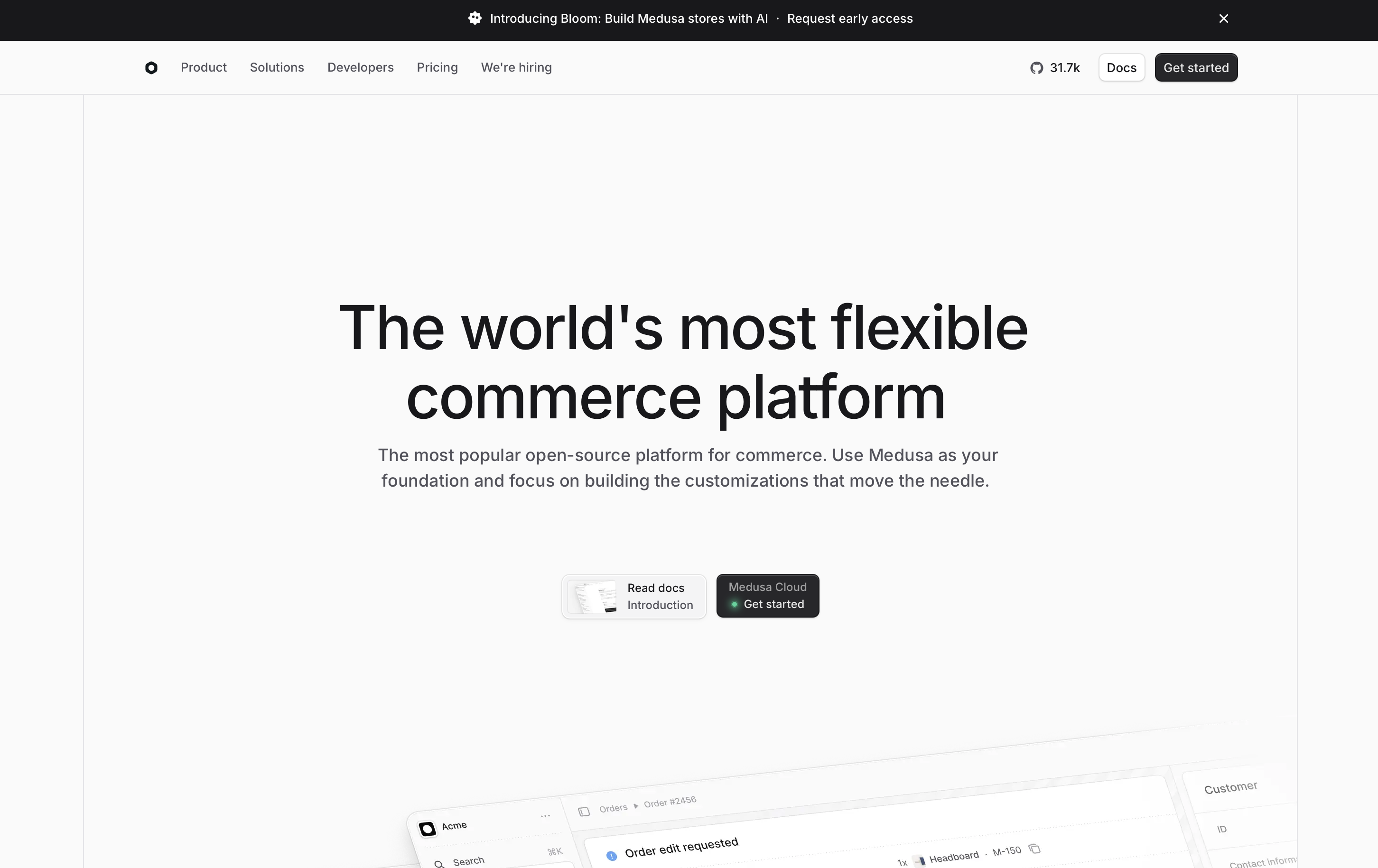
Medusa is an open-source headless commerce platform that offers flexibility and customization. It is often chosen when wholesale pricing logic, customer groups, and integrations do not fit standard SaaS limitations.
Medusa allows teams to implement custom pricing, account-specific pricing, tiered pricing, volume-based discounts, and customer-specific catalogs without platform limitations.
Wholesale businesses can manage bulk orders, purchase orders, and wholesale order management while keeping inventory management and existing ERP systems in sync.
There are no transaction fees, and businesses keep full ownership of customer data.
Open-source platforms offer more flexibility and customization but may require more technical expertise.
Learn more about Medusa in our section Why Medusa
If you want to explore Medusa's enterprise security features, check out our guide - Enterprise-Grade eCommerce Security in Medusa: The Complete 2026 Guide
BigCommerce
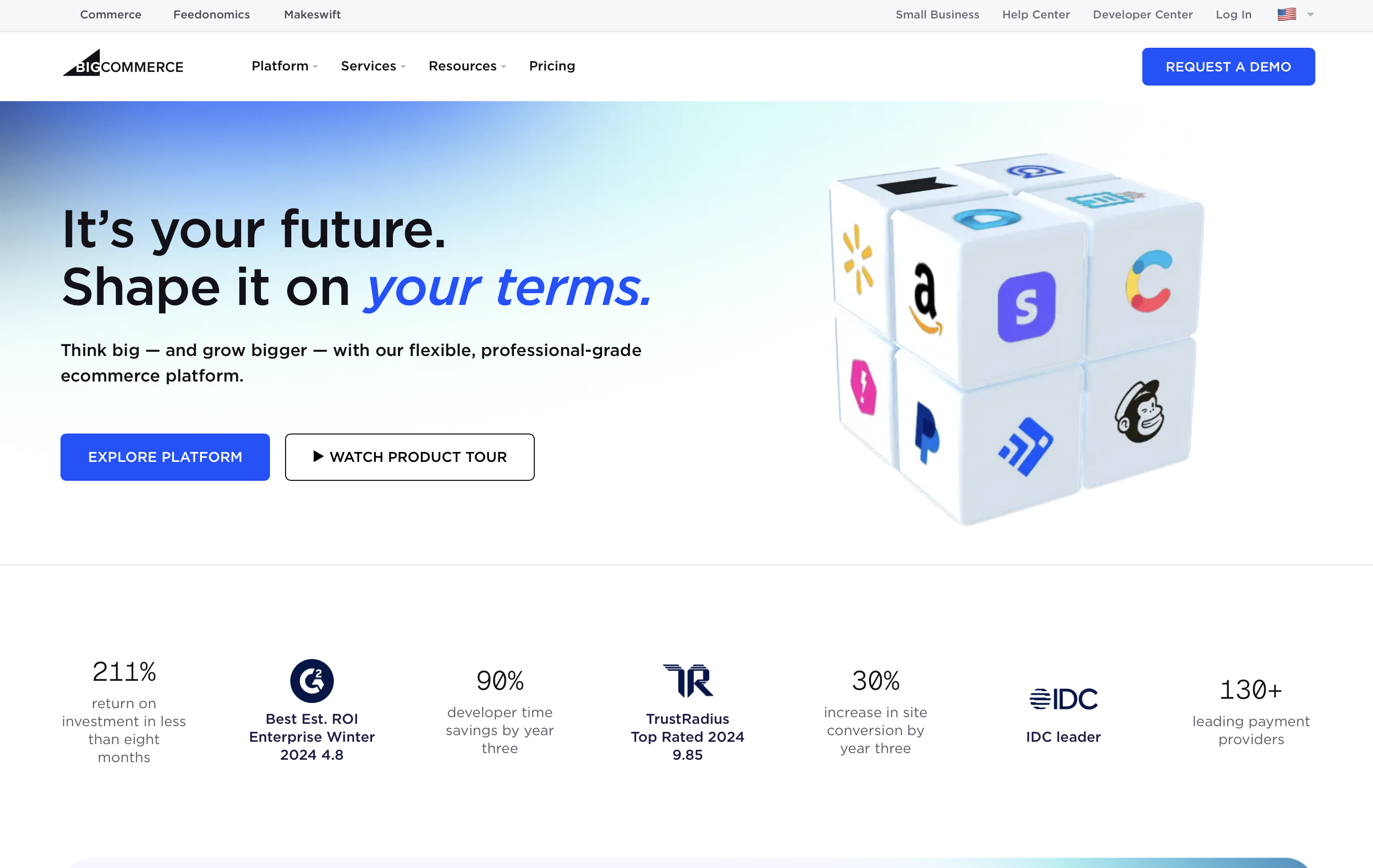
BigCommerce provides built-in B2B features designed for mid-market and enterprise wholesale businesses. The platform supports customer groups, price lists, company accounts, and basic purchase order workflows.
BigCommerce works well for businesses that want faster setup with less custom development. ERP integrations are available through native connectors and partners, though pricing logic and workflows follow platform constraints.
Adobe Commerce

Adobe Commerce (formerly Magento Commerce) is commonly used by enterprise brands with complex wholesale operations. It supports company accounts, shared catalogs, negotiated pricing, and quote-based purchasing.
The platform offers deep customization but usually requires higher development and maintenance effort. It is often paired with large ERP systems and multi-warehouse inventory setups.
Shopify

Shopify is a SaaS platform tailored for high-volume merchants and large businesses. It offers wholesale features through Shopify Plus and B2B-specific functionality added in recent years.
Shopify supports company profiles, price lists, payment terms, and self-service ordering.
Wholesale pricing and workflows follow Shopify’s structure, and transaction fees apply depending on the setup.
Proprietary solutions often provide more out-of-the-box features and support but may be more expensive.
If you want to check the 2026 costs of Shopify, read our article: How Much Does Shopify Cost in 2026?
OroCommerce
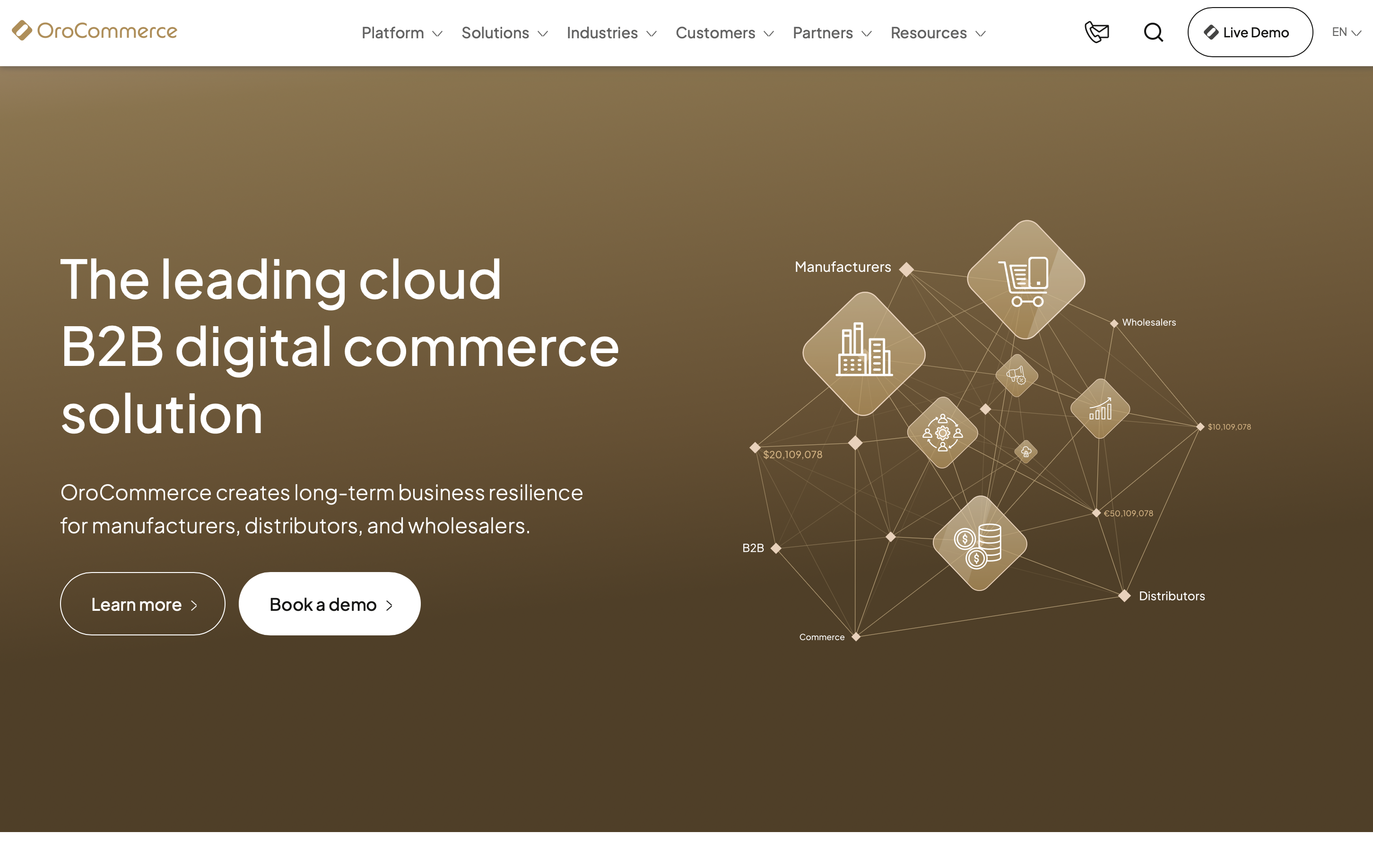
OroCommerce is a B2B-focused platform built specifically for wholesale and distribution use cases. It supports complex pricing structures, customer-specific catalogs, RFQ workflows, and multi-organization setups.
The platform is often used by manufacturers and distributors with long sales cycles and advanced account management needs. OroCommerce requires technical implementation and is typically paired with ERP-heavy environments.
WooCommerce
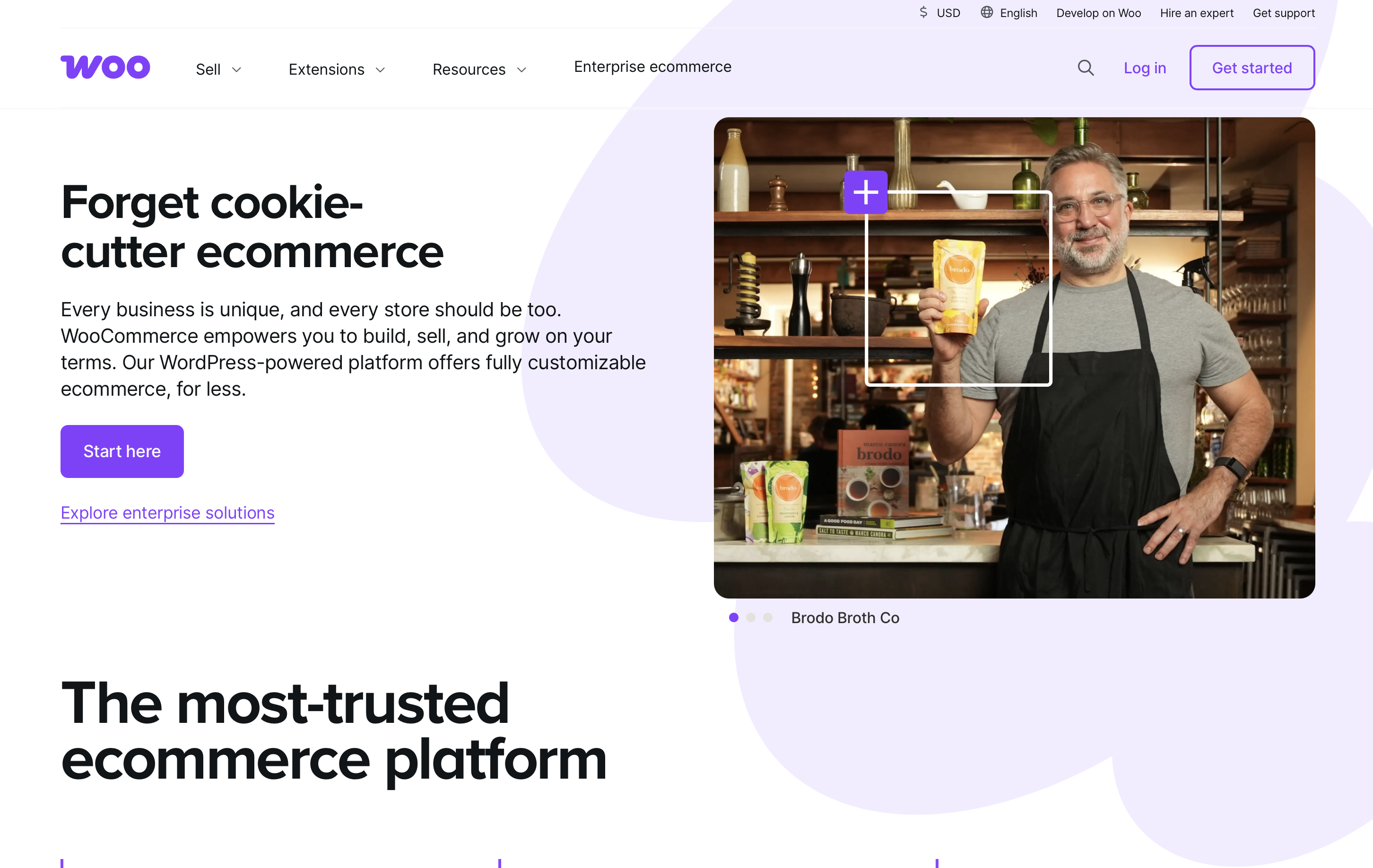
WooCommerce is used for wholesale eCommerce through plugins and custom extensions. It supports basic wholesale pricing, customer roles, and bulk ordering when combined with third-party tools.
WooCommerce fits smaller wholesale businesses or mixed retail and wholesale stores. As complexity grows, managing pricing logic, inventory, and integrations often requires custom development and multiple plugins.
Setting up a wholesale eCommerce store in 3 steps
Launching a wholesale eCommerce business involves several steps.
First, choose your niche and products.
Then, select a wholesale eCommerce platform and set up your online store, customizing it to fit your brand.
Upload your product catalog, configure pricing and payment options, establish shipping and fulfillment processes, and implement marketing strategies.
1. Creating an extensive catalog
A comprehensive product catalog is crucial for wholesale eCommerce. Include:
- Retail product descriptions,
- High-quality images,
- Organize products into logical categories,
- Provide technical specifications and datasheets,
- Offer product variants where applicable.
2. Implementing wholesale pricing strategies
Effective pricing is key to success in wholesale eCommerce.
- Research competitor pricing,
- Consider cost-plus pricing or value-based pricing,
- Implement tiered pricing for different order volumes,
- Offer special promotions or discounts for new customers.
3. Optimizing the online store for wholesale customers
To cater to B2B buyers:
- Streamline the registration process,
- Offer quick order forms and reordering options,
- Provide detailed shipping and return policies,
- Include FAQs and resources specific to wholesale buyers.
Technical foundations for wholesale eCommerce
Wholesale eCommerce platforms usually sit between multiple systems: existing ERP, CRM, PIM, WMS, payment providers, and marketplace channels. The main technical risk is inconsistent pricing, inventory, and customer data across systems.
This section describes common integration scopes, architecture patterns, and security standards used in B2B eCommerce.
Integrations with ERP, CRM, and PIM
ERP (orders, pricing, finance, inventory)
ERP is often the source of truth for inventory management, purchase orders, invoices, and customer credit limits. Typical integration scope includes:
- Product master data and inventory levels.
- Customer groups and account terms, such as credit limits and flexible payment terms.
- Pricing structures, including negotiated pricing, tiered pricing, and volume-based discounts.
- Order synchronization: wholesale order management → ERP sales order → invoice and shipment updates.
- Returns, backorders, and partial shipments.
CRM (accounts, sales reps, relationships)
CRM systems manage sales context and customer relationships. Common integration points include:
- Account ownership and sales reps' assignments.
- Customer segmentation and account status.
- Approval workflows for large or negotiated orders.
- Notes and activity history related to wholesale buyers.
PIM (product data and catalogs)
PIM systems centralize product content and structure. Typical responsibilities include:
- Product attributes, variants, and translations for international trade.
- Digital catalogs and customer-specific catalogs.
- Media assets, technical documentation, and spec sheets.
- Channel-specific product visibility rules.
Store architecture and system design
Wholesale eCommerce architecture should support multiple sales paths and system dependencies.
API-first design
An API-first approach allows wholesale eCommerce to serve multiple storefronts, marketplaces, and partner integrations. APIs typically cover:
- Account management and customer groups.
- Pricing logic and pricing strategies.
- Bulk ordering and purchase orders.
- Order lifecycle events such as approval, fulfillment, and invoicing.
Microservices and modular architectures
Architecture choice depends on scale and operational maturity:
- Microservices fit environments with independent scaling needs across pricing, inventory, checkout, and search.
- Modular architectures reduce operational overhead while keeping clear domain boundaries.
Common domain separation in wholesale systems
- Pricing service: custom pricing, account-specific pricing, tiered pricing rules.
- Catalog service: digital catalogs, customer-specific catalogs, visibility rules.
- Inventory service: multi-location inventory tracking, reservations, and low stock alerts.
- Order service: wholesale order management, purchase orders, partial fulfillment.
- Integration service: ERP, CRM, PIM connectors and data mapping.
- Identity service: authentication, authorization, and sales reps' access.
Security standards for B2B eCommerce
Wholesale eCommerce involves high-value orders and sensitive customer data, which requires stricter security controls than retail eCommerce.
Transport security and certificates
- TLS encryption for all public and internal traffic.
- Managed certificate rotation.
- Secure service-to-service communication.
Payment security and PCI compliance
- PCI DSS-compliant payment providers.
- Tokenization for card data.
- Isolation of payment workflows from core services.
API authentication and access control
- OAuth 2.0 or OpenID Connect for user authentication.
- API keys or signed tokens for system integrations.
- Role-based access for buyers, sales reps, finance, and administrators.
Data protection and auditability
- Encryption of data at rest.
- Audit logs for pricing changes, catalog access, and order updates.
- Strict separation of customer groups to prevent data leakage.
Managing inventory in wholesale eCommerce
Wholesale eCommerce inventory covers bulk orders, repeat purchases, and different customer groups with separate pricing structures.
Poor visibility leads to stockouts, delayed fulfillment, and pricing conflicts for wholesale buyers.
A structured inventory setup supports wholesale operations, selling wholesale at scale, and stable customer relationships.
Importance of inventory management in wholesale
Inventory management in wholesale eCommerce supports daily operations and long-term business growth. Wholesale businesses deal with large volumes, negotiated pricing, and predictable purchasing patterns, which makes inventory planning more complex than in retail ecommerce.
Proper inventory control:
- Keeps wholesale products available for bulk orders and repeat customers
- Reduces overselling across digital channels and marketplace sales
- Limits capital locked in slow-moving stock, supporting cash flow
- Provides accurate stock data for wholesale customers, sales reps, and sales teams
- Supports international trade and multi-warehouse setups
- Aligns inventory management with purchase orders and supplier lead times
Clear inventory data also helps segment customers, adjust pricing strategies, and plan future purchasing based on real demand.
Inventory management tools and techniques
Real-time inventory tracking
Real-time inventory tracking keeps stock levels updated across wholesale ecommerce platforms, retail ecommerce, and digital channels. This allows wholesale buyers and sales teams to see available quantities before placing bulk orders and prevents conflicts between wholesale and retail ecommerce.
Automated reorder points
Automated reorder points trigger purchase orders when stock reaches defined thresholds. Thresholds can differ by product, supplier, or customer group, based on sales velocity and lead times. This reduces manual monitoring and supports consistent availability for wholesale customers.
Forecasting tools
Forecasting tools analyze purchase history, purchasing patterns, and seasonal trends. This supports demand planning for wholesale products and helps align inventory with expected bulk orders and customer-specific catalogs.
Barcode and RFID systems
Barcode and RFID systems track inventory movement within warehouses. These tools reduce counting errors, support faster picking for bulk orders, and keep inventory data aligned with wholesale order management systems.
Warehouse management systems (WMS)
A warehouse management system connects storage locations, picking routes, and packing workflows with the eCommerce platform. This setup supports high-volume wholesale operations and complex product configurations.
Multi-location inventory management
Multi-location inventory tools track stock across multiple warehouses and fulfillment centers. Orders can be routed based on availability, delivery distance, and cost savings, supporting faster fulfillment for wholesale buyers.
Supplier integration
Supplier integration connects inventory systems with suppliers to automate purchase orders and share stock data. This supports supplier relationships and helps prevent gaps in inventory during peak demand periods.
Batch tracking and lot control
Batch and lot tracking support wholesale businesses handling perishable goods or regulated products. Stock rotation based on FIFO rules reduces waste and supports traceability during recalls.
Inventory auditing tools
Inventory auditing tools support cycle counting and regular stock verification without stopping daily operations. This keeps customer data, stock levels, and financial records aligned.
Demand planning software
Demand planning software combines forecasts, lead times, and supplier data to align inventory levels with expected wholesale demand. This supports stable purchasing processes and long-term planning.
ABC analysis
ABC analysis groups inventory based on revenue impact and order frequency. High-impact wholesale products receive closer monitoring, while lower-impact items follow simpler review cycles.
Just-in-time (JIT) inventory
JIT inventory limits stored stock by ordering products close to demand. This model depends on reliable suppliers and stable purchasing patterns, but can reduce storage costs and excess inventory for selected wholesale products.
By leveraging these tools and techniques, wholesale eCommerce businesses can maintain optimal inventory levels, reduce costs, improve cash flow, and ultimately provide better service to their customers.
Remember, the key is to choose the right combination of tools that best fits your specific business needs and integrates well with your platform.
If you want to find out more, check out our article - Mastering Demand Planning and Inventory Management for B2B eCommerce Success.
Building and maintaining customer relationships
Wholesale eCommerce relies on repeat orders, long-term cooperation, and stable customer relationships rather than one-time transactions.
Wholesale customers expect clear pricing structures, consistent account management, and access to personalized catalogs that reflect their purchase history and buying process.
In B2B eCommerce, customer engagement is closely tied to how well a wholesale platform supports self-service, custom pricing, and direct communication with sales teams.
Strong relationships help wholesale businesses retain customers, support customer retention, and drive business growth across wholesale and retail ecommerce models.
Strategies for attracting wholesale buyers
To attract B2B buyers to your wholesale eCommerce store:
- Optimize your site for B2B-specific keywords,
- Showcase your expertise through content marketing,
- Offer incentives for first-time buyers,
- Leverage B2B-focused online marketplaces.
Nurturing customer relationships in B2B eCommerce
Build strong relationships with your wholesale customers by:
- Providing excellent customer service,
- Offering personalized experiences and pricing,
- Maintaining consistent communication,
- Seeking and acting on customer feedback.
Creating loyal customers through excellent service
To foster customer loyalty,
- Implement a rewards program for repeat buyers,
- Offer exclusive deals or early access to new products,
- Provide value-added services like drop shipping or custom packaging,
- Ensure quick resolution of any issues or complaints.
Wholesale commerce and supply chain management
Wholesale commerce depends on tight coordination between selling products online and physical supply chain operations.
Wholesale businesses handle bulk orders, negotiated pricing, and repeat purchasing from the same wholesale customers, which puts pressure on inventory management, fulfillment, and supplier relationships.
When wholesale eCommerce is connected directly to supply chain systems, businesses gain clearer control over wholesale operations, purchasing process, and order execution across digital channels.
This setup supports wholesale buyers, sales reps, and sales teams with faster order handling, better visibility into stock levels, and more predictable fulfillment at scale.
Integrating wholesale eCommerce with supply chain operations
Effective integration of wholesale eCommerce with supply chain operations can:
- Improve order accuracy and fulfillment speed,
- Reduce operational costs,
- Enhance visibility across the supply chain,
- Enable better forecasting and demand planning.
Improving efficiency in wholesale distribution
To streamline distribution:
- Implement automated order processing,
- Use route optimization for deliveries,
- Consider partnering with third-party logistics providers,
- Leverage data analytics to identify inefficiencies.
Managing wholesale orders and fulfillment
Efficient order management is crucial. Use order management systems that:
- Integrate with your eCommerce platform,
- Implement pick, pack, and ship processes optimized for bulk orders,
- Offer order tracking for customers,
- Automate invoicing and payment collection.
Multi-currency, multi-language, and multi-warehouse support in wholesale commerce
Wholesale eCommerce platforms often operate across borders, regions, and sales channels.
International trade introduces currency differences, language localization, and distributed inventory, all of which affect pricing, purchasing, and fulfillment. A wholesale platform should support international expansion without duplicating data or creating separate systems per market.
Multi-currency pricing and exchange rates
Wholesale businesses selling across regions must handle pricing in multiple currencies. This applies to negotiated pricing, tiered pricing, volume-based discounts, and purchase orders.
Typical requirements include:
- Support for multiple currencies per storefront or customer group.
- Exchange rate handling for pricing lists and contracts.
- Fixed pricing per account or dynamic conversion based on exchange rates.
- Currency-aware reporting and invoicing.
- Alignment between eCommerce pricing and existing ERP financial data.
Clear currency handling reduces pricing disputes and simplifies cross-border purchasing for wholesale buyers.
Multi-language storefronts and catalogs
Wholesale buyers expect product information in their local language, especially in international trade setups. A wholesale eCommerce platform should support:
- Multiple languages per storefront.
- Translated product data, categories, and technical descriptions.
- Localized digital catalogs and customer-specific catalogs.
- Language-aware account management and order communication.
Multi-language support also extends to operational workflows such as invoices, order confirmations, and shipping documents.
Multi-warehouse and location-based inventory
Wholesale operations often rely on multiple warehouses or fulfillment centers across regions. Inventory must stay consistent across locations while supporting fast delivery.
Core capabilities include:
- Multi-location inventory tracking.
- Location-based availability and delivery rules.
- Order routing based on stock levels and warehouse proximity.
- Support for partial fulfillment and split shipments.
- Inventory synchronization with existing ERP and warehouse management systems.
This setup allows wholesale businesses to scale into new markets while maintaining predictable fulfillment.
Omnichannel wholesale sales
Wholesale ecommerce rarely runs through a single channel. Buyers often interact with products and pricing across multiple touchpoints.
Common omnichannel patterns include:
- Online wholesale storefronts.
- Downloadable digital catalogs and PDF price lists.
- Mobile applications for sales reps and wholesale buyers.
- Marketplace listings and partner portals.
- API-driven ordering from external systems.
A wholesale eCommerce platform should keep pricing, inventory, and customer data consistent across all channels. This allows sales teams, partners, and wholesale buyers to work from the same data regardless of how orders are placed.
Supporting multi-currency, multi-language, and multi-warehouse operations enables wholesale businesses to enter new markets, support international customers, and operate digital wholesale sales at scale without fragmenting systems.
Marketing strategies for digital wholesale
Marketing in the wholesale commerce space requires a different approach compared to B2C marketing. The focus is on building long-term relationships, showcasing product value, and addressing the specific needs of business buyers.
Here's a detailed look at effective marketing strategies for wholesale businesses:
Effective marketing tactics for wholesale businesses
Search Engine Optimization (SEO) for B2B keywords
Optimize your wholesale eCommerce website for B2B-specific keywords. This includes long-tail keywords that business buyers might use, such as "bulk order [product name]" or "wholesale supplier for [industry]". Ensure your product descriptions, blog posts, and landing pages incorporate these keywords naturally.
Pay-Per-Click (PPC) advertising on B2B platforms
Invest in PPC campaigns on platforms where B2B buyers are likely to search. This includes Google Ads, but also consider advertising on industry-specific platforms or B2B marketplaces.
Use ad copy that speaks directly to the needs of wholesale buyers, emphasizing factors like bulk discounts, quality assurance, or fast shipping for large orders.
Email marketing campaigns:
Develop a robust email marketing strategy. This could include:
- Welcome series for new wholesale customers
- Regular product updates and new arrivals
- Exclusive offers for loyal customers
- Educational content about industry trends or product usage
- Abandoned cart reminders tailored for B2B buyers
Participation in industry trade shows and events
While digital marketing is crucial, don't underestimate the power of face-to-face interactions. Attend relevant industry trade shows to showcase your products, network with potential buyers, and stay updated on industry trends. Consider hosting your own events or webinars to position your brand as an industry leader.
Account-Based Marketing (ABM)
Implement ABM strategies to target high-value potential clients. This involves creating personalized marketing campaigns for specific companies or decision-makers within those companies.
Leveraging content marketing for wholesale eCommerce
Content marketing can be a game-changer for wholesale eCommerce businesses.
By creating informative blog posts, detailed product guides, and in-depth whitepapers, you can establish your brand as a trusted authority in your field. Case studies demonstrating how your products have helped other businesses can be particularly persuasive for B2B buyers.
Video content is increasingly important, even in the B2B space. Use it to showcase your products, demonstrate their use, or provide behind-the-scenes looks at your operations. This can help build trust and give potential buyers a clearer picture of what you offer.
Expanding your reach through online platforms and marketplaces is another crucial strategy. List your products on B2B-focused marketplaces and engage actively on social media platforms, particularly LinkedIn, for B2B connections. Participate in industry-specific forums and consider partnerships with complementary businesses for co-marketing opportunities.
Lastly, don't forget the power of data in shaping your marketing efforts:
- Use customer data to segment your audience and personalize your marketing messages,
- Implement A/B testing to continually refine your campaigns,
- Use retargeting strategies to re-engage potential customers who've shown interest but haven't made a purchase.
By implementing these diverse strategies and continually analyzing their effectiveness, wholesale eCommerce businesses can effectively reach their target audience, build strong relationships with buyers, and drive growth in the competitive B2B marketplace.
Remember, the key to success lies in understanding your unique audience and tailoring your approach to meet their specific needs and preferences.
Analyzing performance for operational efficiency
Important metrics to track include average order value, customer acquisition cost, customer lifetime value, inventory turnover rate, and conversion rate.
Leverage data analytics to identify top-selling products and customer segments, optimize pricing strategies, improve inventory forecasting, and enhance the customer experience.
Utilize analytics tools such as Google Analytics for eCommerce, CRM systems for customer data analysis, inventory management software for stock-related insights, and business intelligence platforms for comprehensive reporting.
Automation and AI in B2B wholesale eCommerce
Modern wholesale eCommerce platforms increasingly use automation and AI to handle scale, pricing complexity, and repeat purchasing patterns.
In B2B, AI is not used for generic personalization, but for operational decisions based on customer data, purchase history, and demand signals.
AI-driven product recommendations
In wholesale commerce, recommendations are based on purchasing patterns rather than browsing behavior. Algorithms analyze:
- Purchase history at the account and customer group level.
- Frequently reordered products and replenishment cycles.
- Cross-sell patterns within bulk orders.
- Seasonality and category-level demand.
These recommendations are used in digital catalogs, quick order forms, and reorder flows to shorten the buying process for wholesale buyers and reduce manual input.
Dynamic customer segmentation
AI supports dynamic segmentation of wholesale customers based on behavior instead of static rules. Segments can be updated automatically using:
- Order frequency and average order value.
- Volume thresholds and discount usage.
- Product mix and category focus.
- Payment behavior and credit usage.
Dynamic segmentation allows platforms to adjust pricing structures, customer-specific catalogs, and payment terms without manual intervention by sales teams.
Demand forecasting and inventory planning
Forecasting algorithms use historical sales data, purchasing patterns, and external signals to predict future demand. In wholesale operations, this supports:
- Stock planning for bulk orders.
- Purchase order timing for suppliers.
- Multi-warehouse inventory allocation.
- Early detection of demand spikes or slow-moving stock.
Accurate demand forecasting reduces stockouts, limits excess inventory, and improves coordination between wholesale operations and suppliers.
Dynamic pricing and pricing insights
AI-driven pricing tools analyze transaction data and pricing performance across customer groups. Common use cases include:
- Adjusting volume-based discounts based on demand.
- Identifying underperforming price tiers.
- Detecting pricing conflicts between wholesale and retail ecommerce.
- Supporting negotiated pricing with data-backed insights.
Pricing insights help pricing teams and sales reps make changes based on real transaction data rather than assumptions.
Workflow automation in wholesale operations
Automation removes manual steps across the wholesale order lifecycle. Typical automated workflows include:
- Order approval based on value, customer group, or credit limits.
- Automatic purchase order creation in ERP systems.
- Inventory reservation and allocation across locations.
- Invoice generation and payment reminders.
- Status notifications for orders, shipments, and backorders.
Workflow automation reduces manual errors and allows sales teams to focus on key accounts and negotiated deals.
AI insights for sales and operations teams
Wholesale platforms increasingly expose AI-generated insights directly in admin dashboards:
- Accounts at risk based on declining order frequency.
- Customers with growing demand signals.
- Products driving most revenue per customer group.
- Forecasted impact of pricing changes.
These insights support decision-making in sales, pricing, and operations without requiring separate analytics tools.
Automation and AI in B2B wholesale eCommerce focus on repeatability, scale, and data-driven decisions. When built into the platform, these capabilities improve pricing control, inventory planning, and customer engagement across complex operations.
Future trends in wholesale eCommerce (2026)
Wholesale eCommerce in 2026 is shaped by scale, data availability, and pressure to reduce manual work. The main changes are becoming standard expectations for B2B buyers and wholesale operations.
Technology trends shaping wholesale platforms
Several technologies are now moving from optional to expected in wholesale eCommerce:
AI and data models in daily operations
AI is used for demand forecasting, dynamic customer segmentation, pricing insights, and reorder recommendations based on purchase history and purchasing patterns. These features support pricing strategies, inventory planning, and account management rather than generic personalization.
Automation across wholesale workflows
Order approvals, purchase order creation, invoicing, inventory allocation, and payment reminders are increasingly automated. This reduces manual work for sales teams and supports higher order volumes without expanding operations teams.
IoT and real-time inventory signals
IoT devices are used in warehouses to improve inventory tracking, stock accuracy, and location-based availability. Data feeds from warehouses support multi-location inventory management and faster fulfillment decisions.
Blockchain in selected supply chains
Blockchain adoption remains focused on traceability rather than payments. It is mainly used in regulated industries and international trade to track product origin, supplier relationships, and compliance data.
AR and visual tools in specific industries
Virtual and augmented reality are used in product-heavy categories such as furniture, industrial equipment, and complex product configurations. Adoption is limited but practical where product specs are hard to communicate through catalogs alone.
Changing expectations of wholesale buyers
Wholesale buyers now expect the same level of control and transparency as in consumer ecommerce, adapted to B2B workflows:
- Strong preference for self-service buying and account management.
- Mobile access for reordering, order tracking, and approvals.
- Clear visibility into pricing, availability, and delivery timelines.
- Personalized catalogs and account-specific pricing instead of static price lists.
- Increased focus on sustainable sourcing and supplier transparency.
These expectations reduce tolerance for email-based ordering and manual sales processes.
Structural changes in wholesale commerce
Several long-term shifts are reshaping wholesale business models:
Tighter integration of online and offline sales
Sales reps and digital channels operate on the same pricing, inventory, and customer data. Offline orders increasingly flow through the same wholesale order management systems as online orders.
Growth of subscription and replenishment models
Repeat bulk purchases are moving to scheduled orders and subscription-based flows, especially in categories like office supplies, food service, and consumables.
Data-driven pricing and operations
Pricing, inventory allocation, and customer prioritization are increasingly based on transaction data and forecasts rather than static rules.
Expansion of direct-to-business and hybrid models
Manufacturers selling directly to retail businesses continue to bypass traditional intermediaries. Many wholesalers respond by adding digital services, faster fulfillment, or marketplace and dropshipping paths.
Build your wholesale commerce today
Wholesale eCommerce allows businesses to sell wholesale online with clear pricing structures, repeat purchasing, and predictable bulk orders. It supports digital wholesale sales across customer groups, markets, and sales channels while keeping pricing, inventory management, and wholesale order management under control.
Building wholesale commerce starts with choosing a wholesale eCommerce platform that fits your operations.The platform should support custom pricing, account-specific pricing, customer-specific catalogs, purchase orders, flexible payment terms, and integration with existing ERP and other business systems.
If you plan to scale wholesale operations, enter new markets, or move more sales into digital channels, we can help you design and build your wholesale eCommerce that fits your business model. Let's talk!
FAQ on wholesale commerce
What is wholesale ecommerce?
Wholesale eCommerce is selling wholesale products online to wholesale buyers such as retail businesses, enterprise brands, and B2B buyers. Orders usually involve bulk orders, negotiated pricing, and repeat purchasing.
Wholesale eCommerce platforms support custom pricing, customer-specific catalogs, purchase orders, and wholesale order management instead of one-off transactions used in retail ecommerce.
What is the meaning of wholesaler in commerce?
A wholesaler in commerce is a business that sells products in large quantities to other businesses rather than to individual consumers.
Wholesalers work with wholesale customers, set wholesale prices, apply tiered pricing or volume-based discounts, and often operate through sales reps or digital wholesale channels. Their role connects suppliers with retail businesses and supports supply chain and inventory management.
Which platform is best for wholesale business?
The best platform for a wholesale business depends on how complex the wholesale operations are.
A wholesale eCommerce platform should support customer groups, personalized pricing, custom catalogs, purchase orders, flexible payment terms, and integration with existing ERP and inventory management systems.
For businesses running wholesale eCommerce, Medusa is often chosen because it allows building a custom wholesale platform with account-specific pricing, multiple storefronts, and full control over wholesale operations without transaction fees.
What’s the difference between wholesale and traditional B2B commerce?
Wholesale eCommerce is built around product catalogs, volume-based discounts, purchase orders, and predictable purchasing patterns, while broader b2b commerce often includes manual sales processes and offline transactions.
Wholesale commerce focuses on repeat bulk orders, fixed customer relationships, and negotiated pricing between suppliers and buyers.
Traditional b2b commerce can include one-off business purchases, service contracts, or project-based sales that do not follow standard wholesale pricing structures.
How does wholesale eCommerce improve operational efficiency?
Wholesale eCommerce improves operational efficiency by moving ordering, pricing, and account management into self-service digital channels. Automated pricing rules, customer-specific catalogs, and wholesale order management reduce manual work for sales reps and sales teams.
Integration with inventory management, existing ERP systems, and payment tools also reduces errors, shortens order cycles, and keeps customer data and purchase history consistent across wholesale operations.